A 12-Point Checklist for Australian Small Business Owners
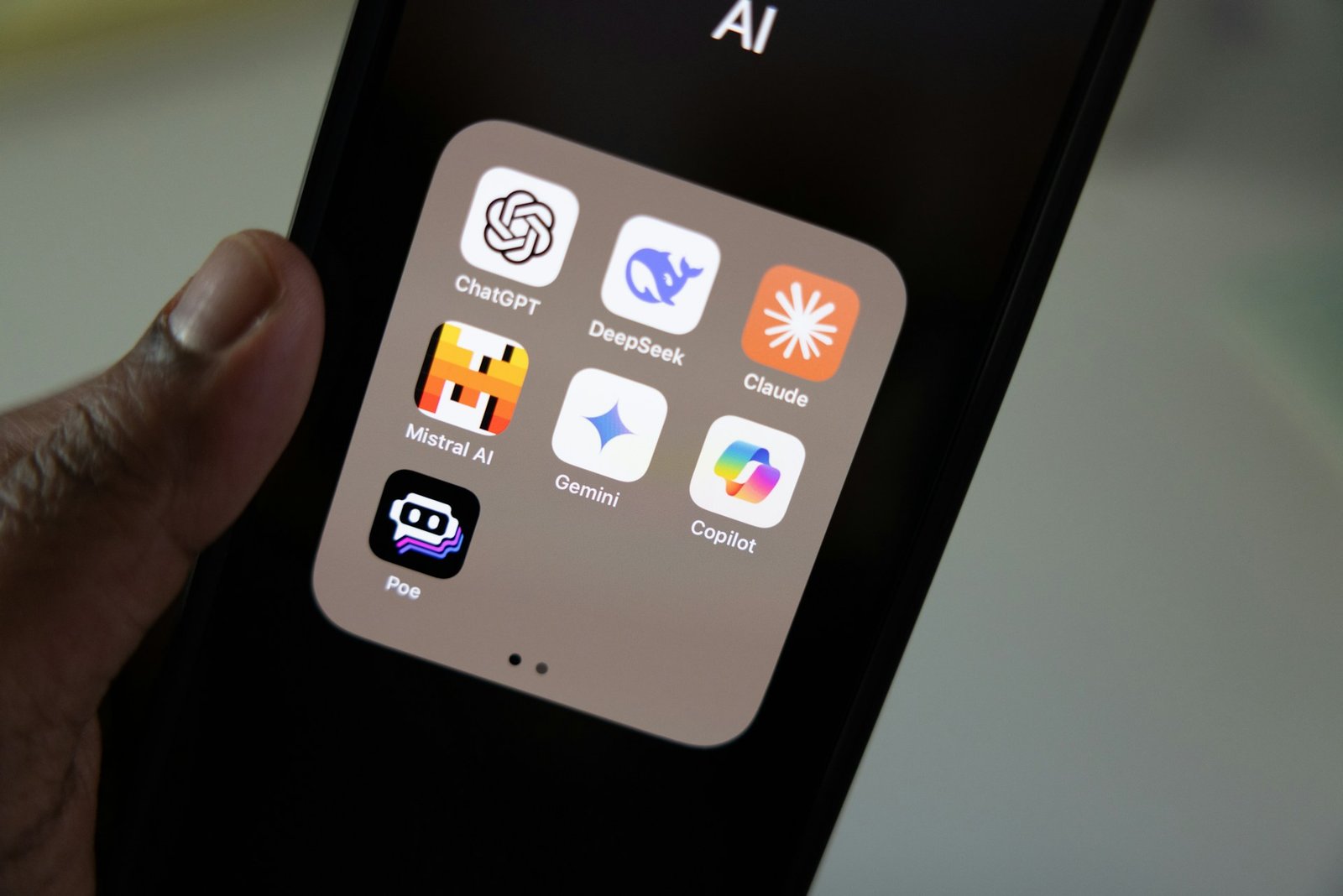
AI-powered search is changing how people find businesses. Tools like ChatGPT, Google’s AI Overviews, Perplexity, Claude and Microsoft Copilot don’t just show a list of websites — they read the web, form an opinion, and recommend businesses directly. And if your website isn’t sending the right signals, you simply won’t be in the conversation. So the question is, is your website AI ready?
The good news? Most of what AI looks for isn’t technical. It’s about clarity, consistency, and credibility — things every business owner can influence.
This checklist covers 12 things you can check right now, without any developer help. We’ve also added 3 bonus items at the end that are worth flagging to your web developer, because they make a real difference.
If you want to understand why any of this matters, our earlier post — Is Your Business Invisible to AI Search? — covers the full picture. This checklist is the practical next step.
Work through each item and give yourself an honest tick or cross. No developer required.
1. Does your homepage tell visitors — and AI — exactly what you do?
Open your website homepage right now. Within five seconds, can a complete stranger understand what your business does, who you help, and where you’re based?
AI tools scan your homepage first. If your opening paragraph is vague — “welcome to our business” or “solutions for your needs” — AI has nothing concrete to recommend you for. Be specific. “Sydney-based hair salon specialising in colour and extensions for women over 40” is infinitely more useful than “premium hair services.”
☐ Tick this if: Your homepage clearly states your service, your location, and who you serve — in plain language, near the top of the page.
2. Do you have a strong About page?
AI platforms look for signals that a business is real, established, and trustworthy. Your About page is one of the most important places to provide those signals.
It should include: how long you’ve been in business, your qualifications or experience, who’s behind the business, and why you do what you do. Don’t be shy about your story — it’s what makes you human and credible to both customers and AI.
☐ Tick this if: Your About page goes beyond a generic paragraph and genuinely represents who you are and why you’re qualified.
3. Do your service pages answer real questions?
Most service pages describe what a business offers. What AI is looking for is pages that answer what people actually ask — “how long does it take?”, “how much does it cost?”, “what’s included?”, “do you service my area?”
Go through your service pages one by one. Are they written in a way that answers the questions a customer would type into AI search? Or do they mostly just list what you do?
☐ Tick this if: Each service page answers at least 3–4 questions a real customer would ask, in plain English.
4. Do you have a FAQs section?
FAQ sections are one of the highest-value things you can add to a small business website right now. AI tools specifically look for content that directly answers questions — and an FAQ section is exactly that.
Your FAQs don’t need to be fancy. They need to be honest, specific, and written in the same language your customers use. Think about the questions you get asked most on the phone or by email — those are your FAQs.
☐ Tick this if: You have a FAQs section somewhere on your website with at least 6–8 genuine questions and clear answers.
5. Is your Google Business Profile complete and up to date?
Your Google Business Profile is one of the first places AI tools check when forming an opinion about your business. An incomplete or outdated profile is a missed opportunity — and can actively work against you.
Check that your profile includes: your correct business name, address, phone number, website, trading hours, business category, services, and recent photos. Then check that everything is accurate and current.
☐ Tick this if: Your Google Business Profile is fully completed and has been reviewed for accuracy in the last 3 months.
6. Is your business information consistent everywhere online?
AI tools cross-reference information about your business across multiple sources. If your phone number is different on your website versus your Facebook page versus a directory listing, that inconsistency damages your credibility in the eyes of AI — and customers.
Your business name, address, and phone number (sometimes called NAP) must be identical everywhere. Even small differences — “St” versus “Street”, an old phone number, a previous address — can cause problems.
☐ Tick this if: Your business name, address, and phone number are identical on your website, Google Business Profile, Facebook, and any directory listings.
7. Are you listed in relevant Australian directories and industry platforms?
AI tools use third-party mentions and directory listings to verify that a business exists and is reputable. The more consistent, credible places your business appears online, the more trustworthy you look.
Start with the basics: Yellow Pages, True Local, and any industry-specific directories relevant to your field. If you’re a tradie, that might include HiPages. If you’re in health, it might be Healthengine. Think about where your ideal customers would look for a business like yours.
☐ Tick this if: Your business is listed in at least 3–5 relevant directories with accurate, consistent information.
8. Do you have genuine, recent reviews?
Reviews are one of the strongest trust signals for both customers and AI. They confirm that real people have used your business and had a positive experience. AI platforms weigh review quality, quantity, and recency.
If you don’t have many reviews, the most effective thing you can do is simply ask. After a job is done, send a quick follow-up message with a direct link to your Google review page. Most happy customers are willing — they just need a nudge.
☐ Tick this if: You have at least 10 genuine Google reviews, including some from the past 6 months, with an average rating of 4 stars or above.
9. Has your website content been updated recently?
AI platforms prefer fresh content. A website that hasn’t been updated in 12 months is harder to recommend than one that shows signs of active use. You don’t need to publish a blog post every week — but regular updates matter.
Check when your pages were last updated, when your last blog post was published, and whether your service information still reflects what you actually offer. Even small updates — a new photo, a refreshed paragraph, an updated FAQ — signal to AI that your site is current.
☐ Tick this if: At least some of your website content has been added or updated in the last 3–6 months.
10. Is your content written in plain language that directly answers questions?
AI platforms are trained on natural language — the way people actually talk and write. Content that reads like a brochure (“we are committed to delivering innovative solutions”) is much harder for AI to extract meaning from than content that answers specific questions directly.
Read your key pages out loud. Do they sound like something a real person would say? Do they answer specific questions with specific answers? Plain language wins — for AI and for your customers.
☐ Tick this if: Your main pages are written in clear, natural language with direct answers to the questions your customers actually ask.
11. Are you active and consistent on at least one social or business platform?
AI tools look beyond your website for signals that your business is active and engaged. Social media profiles that are complete, consistent, and show recent activity contribute to your overall credibility.
You don’t need to be on every platform. Pick the one or two that make most sense for your business and show up there consistently. A complete Facebook page that’s updated monthly is far better than five half-finished profiles that haven’t been touched in two years.
☐ Tick this if: You have at least one active social or business profile that’s complete, consistent with your website, and has been updated in the last 30 days.
12. Is there a clear next step on every key page?
AI tools that recommend your business are essentially sending people to your website to take action. But if visitors land on your page and don’t know what to do next, that opportunity is lost.
Every key page on your website should have one clear call to action: call us, book a consultation, get a quote, send us a message. Make it easy to find and easy to act on.
☐ Tick this if: Every main page on your website has a visible, easy-to-find call to action.
3 Extras That Are Worth Talking to Your Developer About
These three items require someone technical to implement — but they’re worth knowing about, because they make a meaningful difference to how AI platforms understand and recommend your business.
🔧 Schema markup — This is behind-the-scenes code that tells AI platforms exactly who you are, what you offer, where you’re located, and what your reviews say. It’s one of the most direct ways to improve your AI visibility and is something a good web developer can implement relatively quickly.
🔧 Page speed and mobile performance — AI tools factor in technical quality when deciding whether to recommend a website. A slow site or one that doesn’t work well on mobile is a liability. Your developer can run a performance audit and address the biggest issues.
🔧 Technical foundations — SSL security certificate, an accurate sitemap, and correct crawl settings ensure AI tools can actually access and read your website properly. These are non-negotiable basics that should already be in place — but are worth confirming.
How Did You Score?
10–12 ticks — You’re in strong shape. Your website is sending the right signals and giving AI platforms what they need to recommend you. Focus on staying consistent and keeping content fresh.
6–9 ticks — You have a solid base with some clear gaps worth addressing. Prioritise the items you crossed first — consistency of information and fresh content will give you the fastest results.
Under 6 ticks — Your website needs some attention before AI platforms can confidently recommend you. The good news is that most of these items are within your control, and improving even a few of them will make a noticeable difference.
Not Sure Where to Start?
At HotsWots Digital, we work with small and medium-sized businesses across Australia to make sure their websites are set up to be found — by Google and by AI. Whether you need a full website audit, help ticking off the technical items on this list, or a complete GEO strategy, we’re here to help.
Get in touch with the HotsWots team for a no-obligation conversation about where your website stands.
_______________________________________________
HotsWots Digital is a boutique web development and digital marketing agency based in Sydney, with over 14 years experience helping small and medium businesses get found online — on Google, and now on AI.

Judith Shuttleworth is the founder of HotsWots Digital, a boutique web development and digital marketing agency based in Sydney. With over 14 years working with small and medium businesses across Australia, Judith specialises in websites, SEO, and AI search visibility — and writes to help business owners cut through the tech noise.